 Written by Hannah · New York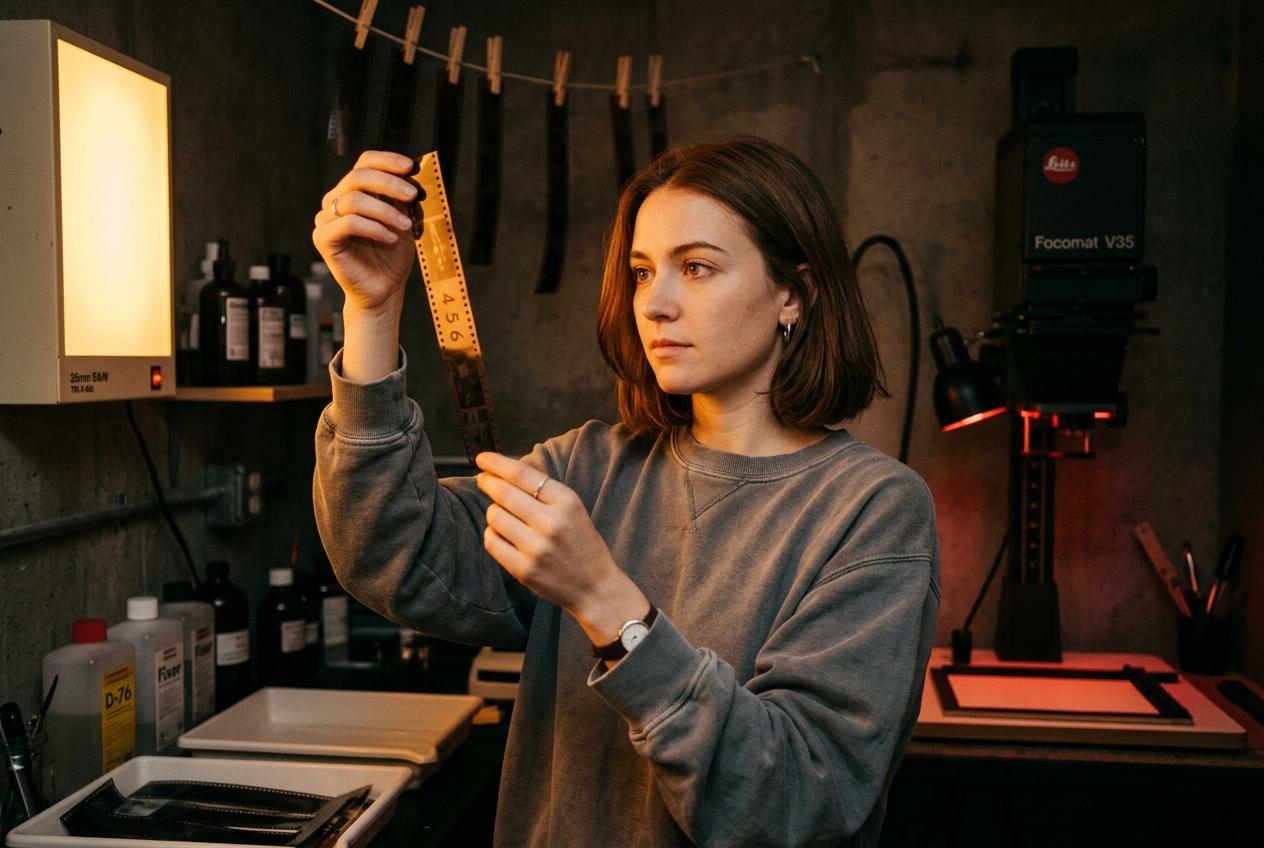
The darkroom smells like acetic acid, wet paper, and iron. It is one of the few places left in New York where time cannot be negotiated. You cannot scroll, you cannot rush the chemical agitation cycle, and if you expose the paper to sudden light before it is fixed, the entire silver frame goes black. I spend three nights a week in this subterranean room in Gowanus, watching images slowly bleed into visibility under an amber safelight. It is meditative, but it also ruins you for superficial small talk.
On commercial sets in SoHo, my job is technically to direct bodies: tilt your chin toward the fill card, soften your jaw, drop the left shoulder. The model knows what the client wants, and the client knows what will sell sweaters. But my favorite photograph from any ten-hour shoot is almost never the one on the call sheet. It is frame thirty-four, when the strobe misfires, the model sighs, laughs at her own fatigue, and wipes stray mascara with the heel of her hand. For half a second, the performance breaks. That half-second of unposed humanity is the only frame worth printing.
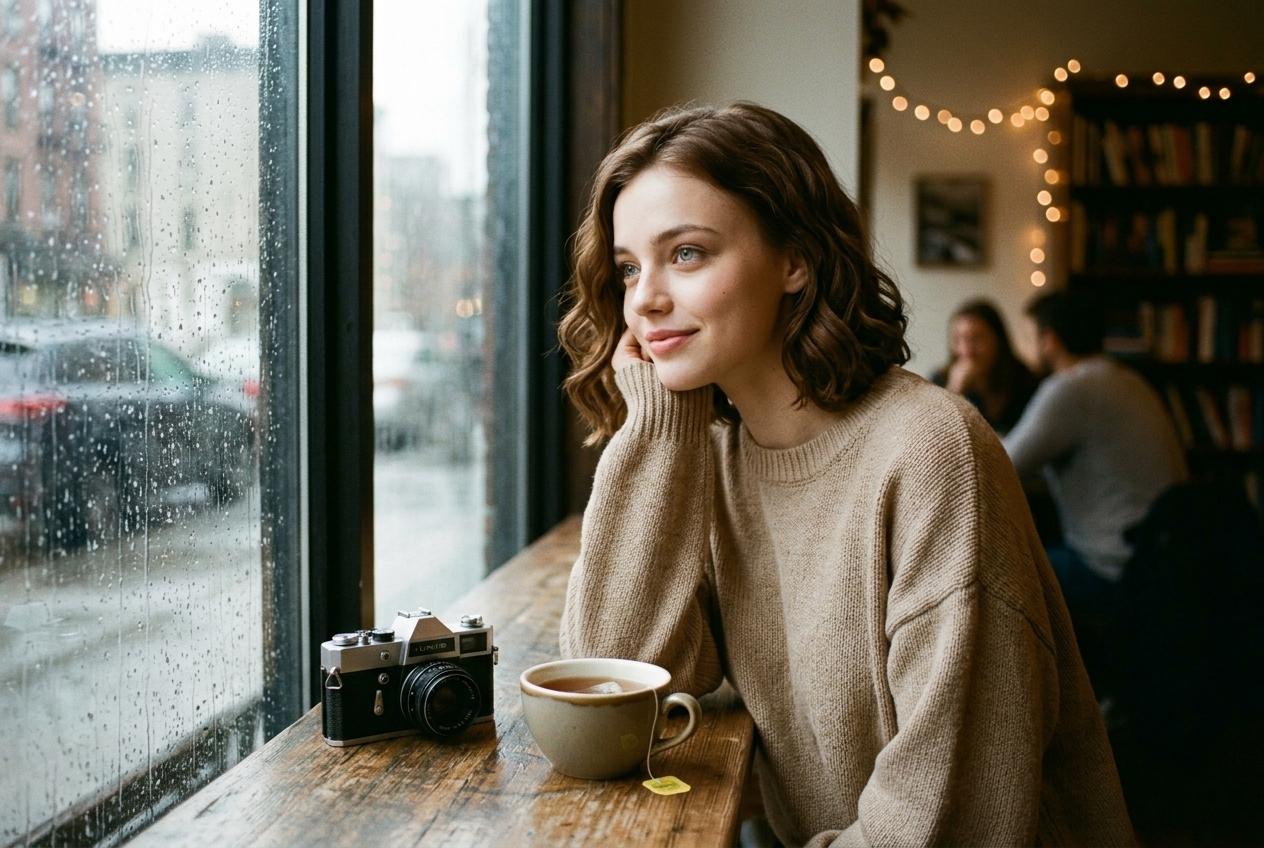
I walk back to my apartment over the Manhattan Bridge around midnight when the subway feels too stale. The East River looks like polished slate, and the yellow cab headlights string out across FDR Drive like dying embers. People ask me what it feels like to live alone in New York at twenty-three. Mostly, it feels like paying very close attention. You learn to listen to the cadence of footsteps behind you, the way rain changes the smell of steam vents, the exact angle at which autumn light cuts between brownstones on 10th Street.
I think about love the same way I think about focal length. Everyone wants the wide angle at first—the spectacle, the weekend getaway, the curated dinner with linen napkins and the right wine. But wide angles distort the edges. Real intimacy is a 50mm lens: normal, uncompressed, honest. It is knowing what someone looks like when they wake up with sheet marks on their cheek, or how their shoulders drop when they finally close their laptop after a brutal Tuesday. You do not fall in love with someone's highlight reel. You fall in love with the outtakes.
The irony is that being a chronic observer makes it terrifying to be looked at. When you spend your life behind the viewfinder, you become comfortable directing the light toward everyone else. It is safe back here. If I ask you about your childhood, your regrets, the dream you gave up on when you were twenty, I don't have to explain why I keep three unfinished photo books stacked in my closet or why quiet apartment hallways sometimes make my chest tight. I am still learning how to let someone turn the lens around without flinching.
So if we talk, don't give me the elevator pitch of who you think you should be. Skip the practiced anecdotes you tell at dinner parties. Tell me about the afternoon you sat in your car in an empty parking lot just listening to the rain, or the promise you made to yourself that you haven't kept yet. I promise you don't have to hold a pose with me. The unposed frames are the only ones I keep anyway.